
Timer On The Sun — Chapter 2
Some Nights Rewrite Everything You Thought You Knew

Hi Friend,
If you joined me for the start of this new writing journey, you’ve already caught Chapter 1 for this new work. If you haven’t, see that here:

If you’ve already read that chapter, let’s continue the story, now from the perspective of our other key character in this dual POV novel, Jae. I truly hope you find something in the lines, Just For You.
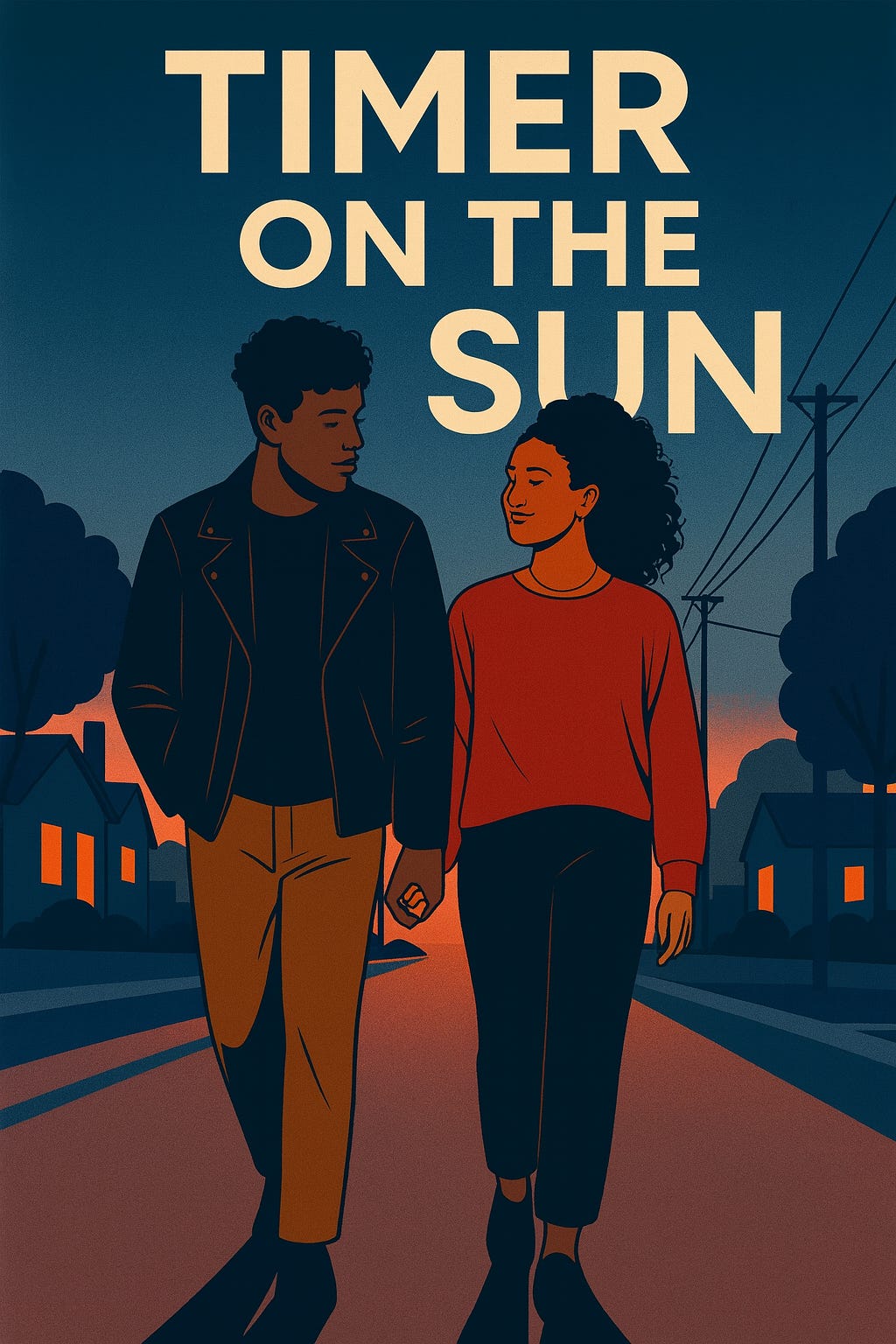
Chapter 2
Jae Morgan
The guitar still hummed against my palms after I set it down. That's the thing about performing, your body keeps the song going even after the music stops. Like phantom limbs, but for sound.
My throat knew it too. That slight burn from pushing air through lyrics I hadn't sung in months. The way my fingertips pulsed, already missing the strings. Years in conference rooms had made me forget this feeling of being a tuning fork for other people's emotions. Being necessary.
“Yo, that was beautiful, man.” Some guy I didn't know clasped my shoulder as he passed, heading inside. His girlfriend followed, humming the chorus. They'd remember it wrong by morning, but tonight it was theirs.
That's what I'd missed most. Not the applause, but the theft. The way people took your songs and made them about their own almost-loves and missed chances.
Micah was already breaking down his bass, wrapping the cable with the same precision he'd had since college. Counter-clockwise, always. Like his mom taught him when she used to manage gospel choirs. “Still got it,” he said, not looking up.
“It's one song, Micah.”
“One song that had everybody leaning in.” He finally met my eyes. “Even that girl with the coat. The one asking about you.”
“What girl?”
“Designer coat. Looked like she was taking notes in her head. Dipped right after you finished, though. On her phone the whole walk to her car.”
I shrugged, but something in my chest flickered at that.
“When's the last time you played out?” Micah asked.
I didn't answer because we both knew. Four years, three months. The Pageant opening for a band that had opened for John Mayer once. We'd cleared maybe seventy bucks after gas. Darren had thrown up in the car on the road back home to Chicago—not from drinking, from exhaustion. From the realization that this was it. The ceiling. The best it was going to get.
“The Pageant,” Micah said anyway, because he was a masochist. “Right before you got all corporate.”
“Right before I got smart.”
“Same thing.” He unplugged his amp, wound the power cord. The backyard had thinned to maybe twenty people. Smoke from the dying bonfire mixed with September air, that particular Midwest smell that meant summer was lying about staying. Someone had moved the speaker inside, and now soft R&B music was floating through the screen door, mixing with laughter from the kitchen.
“Remember when we thought we'd be famous by twenty-five?” Micah said.
“We were idiots.”
“We were brave.”
“Same thing.”
He laughed, but it had weight to it. Micah taught music at Chicago Academy for the Arts now. Showed kids how to hold instruments they'd never afford to own. He was good at it, happy even. But sometimes, like now, I caught him looking at his bass like it was a winning lottery ticket he'd lost.
“Your PowerPoints must be fire if you can still make a guitar sound like that,” Darren said, appearing with three beers. He still wore that Cubs hat like it was part of his skull, the same one from our first real gig at Lincoln Hall. We'd made forty dollars and felt like kings. “Morgan Consulting Services, ladies and gentlemen. We'll optimize your workflow and make you cry with a B-minor.”
“Shut up.” But I took the beer. It was the good stuff, not the college throwback trash we used to drink. We were adults now, apparently.
“I'm serious. You ghost us for months, show up in your leather jacket disguise, then remind everybody why we used to pack rooms.” Darren took a pull. “It's rude, actually.”
“I've been busy.”
“With what? Excel formulas?”
“With life. Rent. Health insurance. Adult things.”
“Boring things,” Darren corrected. He worked construction now, but still played dive bars on weekends. Still believed. It was either admirable or delusional, depending on the light. “Remember when we opened for Nelly's cousin's friend that one time?”
“That wasn't Nelly's anybody,” Micah said.
“He said he was.”
“Everyone says they're connected to Nelly in St. Louis.”
“Whatever. Point is, we were going places.”
“We were going to Taco Bell at 3 AM,” I said. “That's the only place we ever went. My stomach pains remember.”
But I did remember. The feeling that every show might be the one. Every song might be the bridge. That delusion that kept you alive until it didn't.
“We had that meeting though,” Darren insisted. “With that A&R guy from Cincy.”
“Who wanted us to sound more like Maroon 5.”
“Still. It was a meeting.”
“It was a waste of gas money.”
Before Darren could respond, movement caught my peripheral. Through the sliding door, I saw her—Maya—talking to someone by the kitchen island. Her hands moved when she talked, these small gestures like she was conducting an orchestra only she could hear. The crimson sweater had shifted off one shoulder. She laughed at something, and the sound cut through glass and distance like it was meant for me.
I'd known Maya since freshman year. She'd transferred in from somewhere south, walked into AP History like she'd been there all along. Sat two rows ahead of me, close enough that I memorized the way she twisted her hair when she was thinking. Four years of advanced classes together. Four years of me never saying more than “Can I borrow a pen?” or “What'd you get for number seven?”
“Go talk to her,” Micah said.
“To who?”
“To who,” Darren repeated, shaking his head. “Man, you've been staring at Maya Lane since we were sixteen.”
“I haven't been—”
“Junior year talent show,” Micah interrupted. “You forgot the second verse of that Dashboard Confessional song because she was in the front row.”
“Senior prom,” Darren added. “You went alone rather than ask her.”
“She had a date.”
“She went with her cousin, bro.”
“How was I supposed to know that?”
“By talking to her. Like a human. With words.”
“You changed the key of 'Timer' when you saw her watching,” Micah said. “Don't even front.”
I had. Dropped it a half-step without thinking, found that place where my voice could stretch without straining. The place that sounded like confession instead of performance. The place that made my chest crack open a little.
“She's probably leaving soon,” I said.
“Probably,” Micah agreed. “Or she's probably waiting for you to stop being you and actually do something.”
“What's that supposed to mean?”
“It means you've been playing it safe since Trevor McCrary called us 'wedding band material' in that Tribune review.”
That review. Three paragraphs that killed us slowly. “Pleasant but forgettable.” “Technically proficient but emotionally vacant.” “Wedding band material.” We'd framed it as a joke, hung it in our practice space. But it wasn't funny. It was a diagnosis.
“That was three years ago,” I said.
“And you've been hiding ever since.” Darren finished his beer. “Look, I get it. Rejection sucks. The industry sucks. But you just lit up a backyard full of strangers with one song. And Maya Lane, who you've been in love with since forever—”
“I'm not in love with—”
“—is standing right there, looking like she's waiting for something. Maybe stop being scared of the good things too.”
The thing about old friends is they remember who you were before you decided who to be. Before you learned to manage expectations. Before you chose safety over possibility. They remember when you believed your own voice could change the temperature of a room.
Through the glass, Maya turned. Our eyes met. She smiled—not the polite smile of recognition, but something warmer. Something that said maybe she'd been waiting too.
“Ten bucks says you chicken out,” Darren said.
“Twenty says he doesn't even make it to the door,” Micah added.
“You're both assholes.”
“Assholes who are right.”
I finished the beer. Set it down on the amp. Straightened my jacket that Darren was right to call a disguise. Underneath, I was still the kid who forgot lyrics when pretty girls watched. But maybe that was okay. Maybe that was the point.
“If this goes badly, I'm blaming both of you.”
“If this goes badly, we'll write a song about it,” Micah said. “Remember? That's what we used to do. Turn the hurt into something useful.”
I walked toward the house. Behind me, I heard Darren say, “He's actually doing it.”
“About damn time,” Micah replied.
I pulled the door open. Walked inside.
The kitchen smelled like someone had tried to cook and given up halfway through. Burnt edges of ambition. Maya stood by the sink, alone now, rinsing a glass like it was meditative. The party had moved to the living room—I could hear someone attempting to explain cryptocurrency to someone else who was too polite to leave.
“Hey.”
She turned. That smile again, the one that made me feel like I'd been walking in the wrong direction until now.
“Hey yourself. That was...” She paused, set the glass down. Water droplets clung to her fingers. “I forgot you could sound like that.”
“Like what?”
“Like you meant it.”
The words hung there. Someone had turned the music down, or maybe my ears had just focused on her frequency. Everything else became static.
“I always meant it,” I said. “Maybe that was the problem.”
She dried her hands slowly. “That's never the problem. The problem is when people stop meaning things. Like Derek did. Three years of auditioning for my own life.”
“Lawyer Derek? Drives the Tesla?”
“Drove. Past tense. For both the Tesla and us.”
“I'm sorry.”
“Don’t be,” she looked down for just one moment, as if to remember. “It was a lesson.”
I thought about the last relationship I'd tried. Sarah from work. Six months of scheduling conflicts and conversations about market projections. Also one heck of a lesson.
She picked up another glass, started washing it even though it was clean. “Why didn't you ever talk to me in high school?”
The question landed like a chord change I wasn't ready for. “You know why.”
“I have theories. But I want to hear you say it.”
I moved closer, not crowding, just closing the distance to conversational. She smelled like vanilla and something sharper, maybe. “You were Maya Lane. Honors Society, loved by all, going places.”
“And You were Jae Morgan. Who made the whole auditorium shut up when you sang. Who I used to watch from the library windows when you'd practice on the quad.”
“You watched me?”
“Only every Tuesday and Thursday. You had a pattern.”
My chest did something complicated. “Maya—”
“Also, that's bullshit, by the way,” she giggled. “The 'going places' thing. You know where I went? Northwestern for pre-med. Twelve miles from where I started. You at least took a shot at something real.”
“And failed spectacularly.”
She gestured toward the backyard. “That didn't sound like failure. That sounded like someone who's been holding their breath for two years.”
“You want to get out of here?” The question surprised me as much as her.
She tilted her head. “Together?”
“I mean, separately would defeat the purpose.”
That laugh. Soft, but real. “Where would we go?”
“Anywhere that isn't here, with everyone pretending not to watch us.”
She glanced toward the living room, where sure enough, three people suddenly became very interested in their phones.
She looked back at me and clicked her tongue; laughed. I took a step closer, so she was the only one in earshot, “Let’s do something spontaneous — Just for tonight?”
“Ok, deal. I'm not planning past tonight. Planning is what got me three years of Derek.”
“What about your friends? Won't they wonder where you went?”
“They left an hour ago. I stayed because...” She looked at me. “Because you stayed.”
Everything in the room shifted. The air got thicker. Sweeter. More dangerous.
“So?” she said, grinning. “You coming?”
She moved toward the door. Didn't look back. Didn't need to.
Behind us, I heard the party notice our exit. Tomorrow there would be texts. Questions. Assumptions. But tonight was just ours.
“Hey Jae?” she said as we stepped into the September air.
“Yeah?”
“Bring your guitar.”
Maya drove with the windows down despite the September chill, her hair whipping around her face. The radio was playing something low and thrumming—Anderson .Paak maybe—and she knew every word.
“You still go out?” I asked.
“Define 'out.'“
“Anywhere that requires real clothes and staying awake past ten.”
“Then no. I go to wine bars with other doctors where we complain about insurance companies and pretend we're not boring.” She glanced at me. “You?”
“I go to networking events where everyone pretends apps are revolutionary.”
“Are they?”
“They're usually just fancy looking with better marketing.”
She laughed, took a turn that led us toward downtown. The skyline looked like a mouth full of broken light. Beautiful and sharp. “Remember when we thought Chicago was going to be temporary? Like we'd all leave after college?”
“You did leave.”
“I went to Evanston. That doesn't count. That's like saying you left your house because you went to the garage.”
The streets got busier as we approached River North. She pulled into a parking garage that charged criminal rates, but neither of us mentioned it. We were adults with real jobs now. We could afford twenty-dollar parking. The saddest flex.
“The Bassment is still open,” I said as we walked. “If you want—”
“The place you used to play?”
“Yeah. Thursday nights. Had a residency for like six months.”
“Before or after the wedding band era?”
“During. It was... complicated.”
She stopped walking. We were on Hubbard, the street noise wrapping around us like a familiar coat. “Show me.”
“Maya—”
“I'm serious. Show me where you used to be you.”
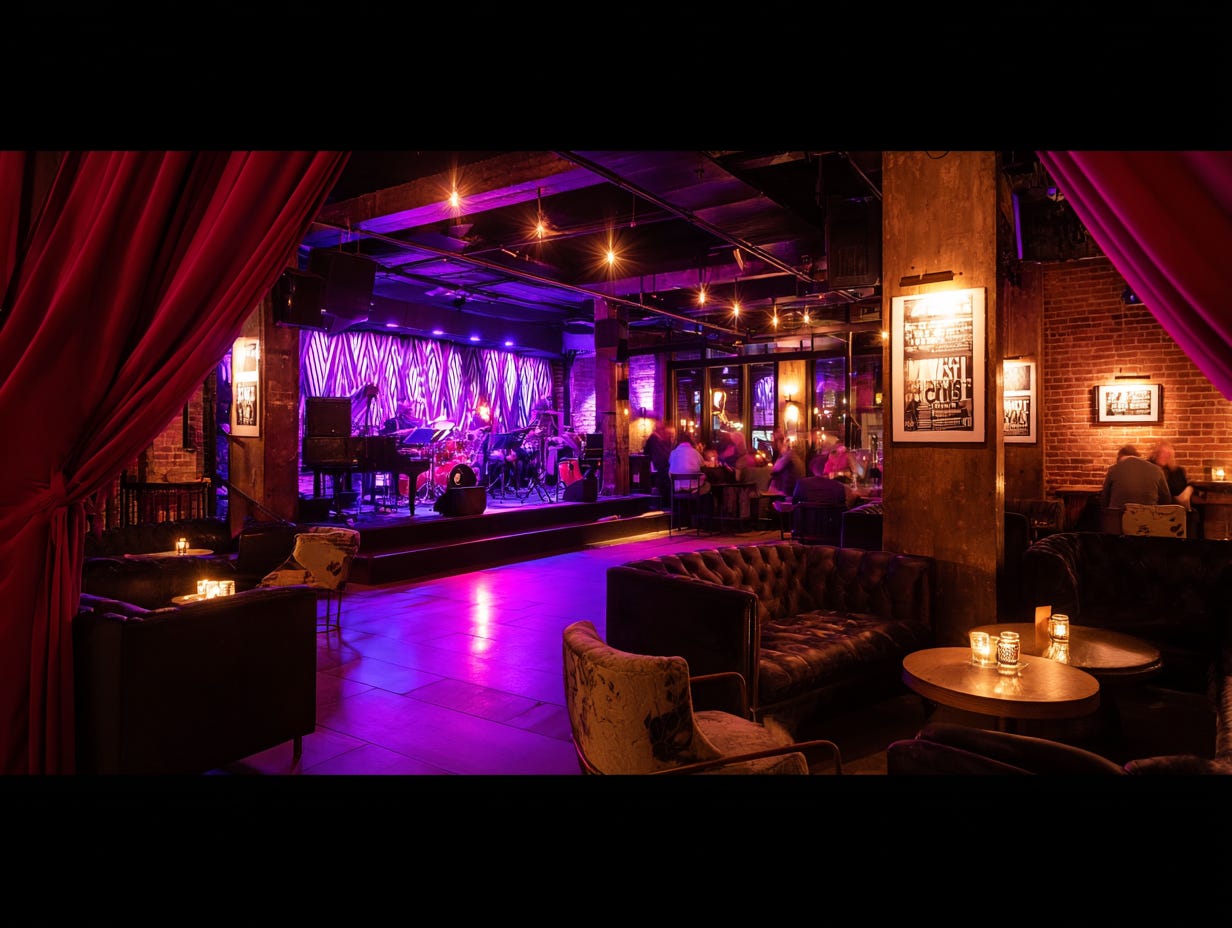
The Bassment hadn't changed. Still the same narrow stairs down from street level, same neon sign with the burnt-out second 's'. Same bouncer—Holy shit, Big Mike was still working the door.
“Jae Morgan. Man, where you been?”
“Around. Working.”
He looked at Maya, back at me. Grinned. “About time you brought someone worth impressing.” He waved us through. “They're doing neo-soul tonight. You'd dig it.”
Inside was purple light and exposed brick, the bar along one wall and a small stage at the back. Maybe forty people scattered around small tables. The band was setting up—drums, keys, bass, two vocalists. Young. Hungry. That specific energy of people who still believed Thursday night gigs led somewhere.
“You want a drink?” I asked.
“Whatever you're having.”
I ordered two whiskeys, neat. When I turned back, Maya had found a table near the stage but not too close. Strategic. She could watch without being watched.
“This is where you played?”
“Every Thursday for six months. Made enough to cover gas and drinks. Sometimes.”
“Was it worth it?”
“It was everything.”
The band started. The female vocalist had a voice like smoke—rough but pretty. They opened with a D'Angelo cover that shouldn't have worked but did. Maya closed her eyes, found the pocket of the rhythm with just her shoulders.
“Dance with me,” she said after the third song.
“Here?”
“Unless you forgot how.”
The floor was small, maybe six other couples moving in that way people do when they're trying not to try too hard. Maya didn't care. She moved like water finding its level—natural, inevitable. I'd forgotten this feeling, being in my body without apology. She pulled me closer during a slow burn cover of “Ascension.” Her hand on my chest, feeling my heartbeat accelerate.
“You're different than I remember,” she said, having to speak directly into my ear.
“Different how?”
“Less careful. More here.”
“Maybe you bring it out.”
She pulled back enough to see my face. “That's a line.”
“That's the truth.”
The band shifted into something original. The bassist was showing off now, laying down a groove that made standing still impossible. Maya turned, her back against my chest, and we moved like that for a while. Like we'd done this before. Like we'd been doing this for years in some parallel universe where I hadn't been a coward.
“This is good,” she said. “But I know you know somewhere better.”
She was right. “You sure you want better? Better means messier.”
“I've been clean my whole life. Show me messy.”
We stayed for two more songs—I wanted to leave the band a decent tip, remembered being them—then headed back into the night. The city felt different now. Warmer. More possible.
“There's a place in Wicker Park,” I said. “But it's—”
“Messier?”
“Younger. Louder. More... everything.”
“Good.”
Subterranean was underground, literally. You had to know it was there to find it. The bouncer didn't recognize me, but he recognized the look—two people trying to disappear into music and each other. The cover was twenty bucks each. Maya paid before I could reach for my wallet.
“I asked you out,” she said.
“This is out?”
“This is something.”
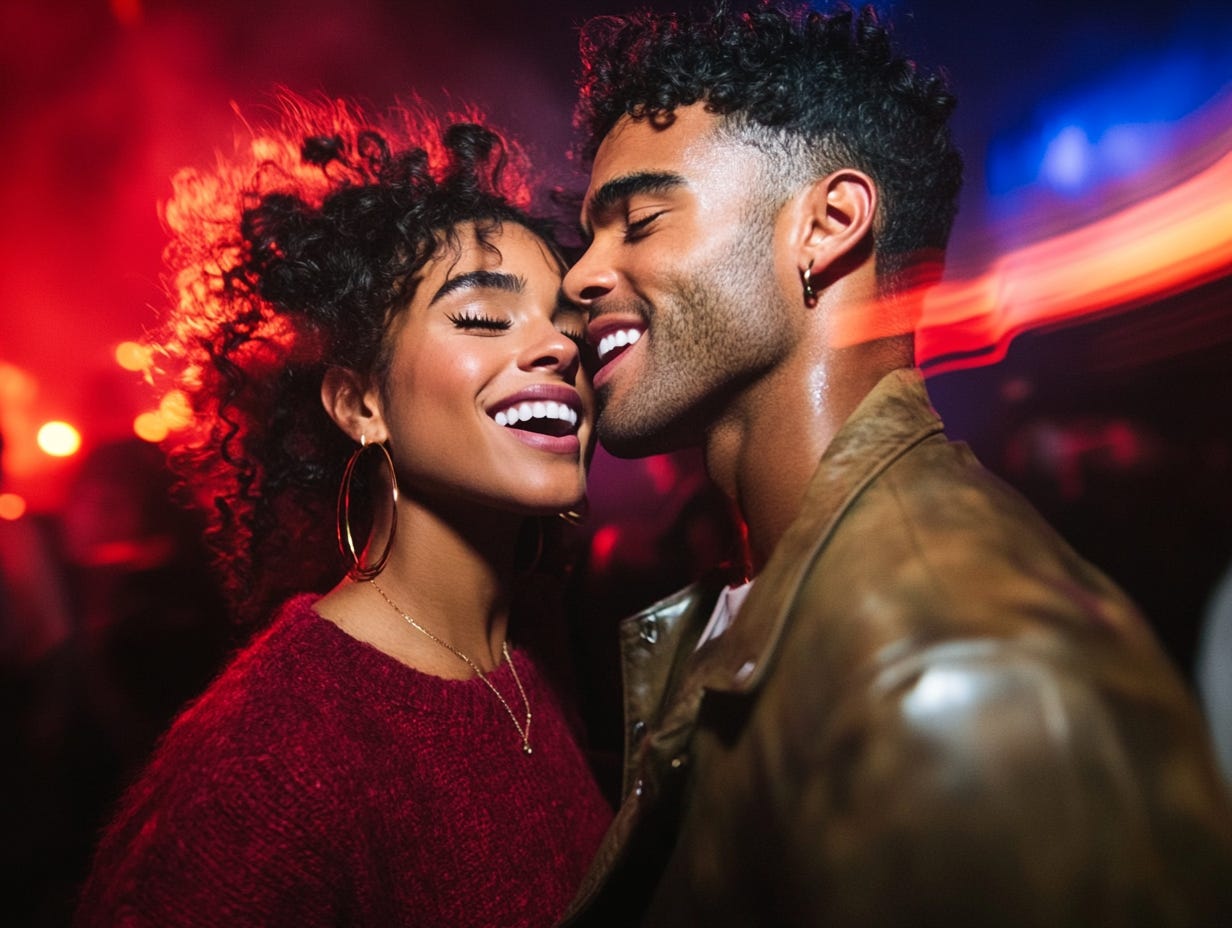
Inside was all red light and bass you could feel in your teeth. The DJ was playing a set that moved from Afrobeats to trap to something that might have been Ethiopian jazz. The crowd was mixed—college kids, artists, people who worked in restaurants and only came alive after midnight. Everyone moving like tomorrow was a rumor.
Maya grabbed my hand, pulled me into the center of it. This wasn't the careful swaying from before. This was bodies and heat and her hair whipping as she found the center of the sound. She danced like nobody was watching, which made everyone watch.
I kept up, barely. The whiskey helped. Or maybe it was just her—the way she'd occasionally grab my shirt to pull me closer, then spin away. Teasing. Testing. Seeing if I'd follow.
I did. I always would.
“You know what I love about this?” she shouted over the music.
“What?”
“Nobody here cares who we were supposed to be.”
A girl with blue braids bumped into us, apologized, then said, “Y'all are beautiful together,” before disappearing back into the crowd.
Maya laughed. Pulled me closer. “We're beautiful together.”
“We're something.”
She kissed me then. Not careful or asking. Just certainty. Her mouth tasted like whiskey and possibility. When she pulled back, the smile she gave me rewired my entire nervous system.
“Too much?” she asked.
“Not enough.”
But the crowd was getting thicker, younger, louder. We danced for another half hour, until sweat made her sweater stick to her skin, until my shirt was soaked through. Until the music started sounding the same.
“Food?” she asked.
“God, yes.”
Outside, the September air hit like a blessing. We were both breathing hard, smiling like idiots. Her lipstick was smudged. My hair was destroyed. We looked like exactly what we were—two people who'd been trying to dance out fifteen years of missed chances.
“There's a diner on Milwaukee,” I said. “Unless you want—”
“Diner. Yes. Something terrible for us.”
The Golden Apple was a Chicago institution. Twenty-four hours of grease and redemption. The hostess sat us in a corner booth without asking. We looked like corner booth people—disheveled and happy and slightly feral.
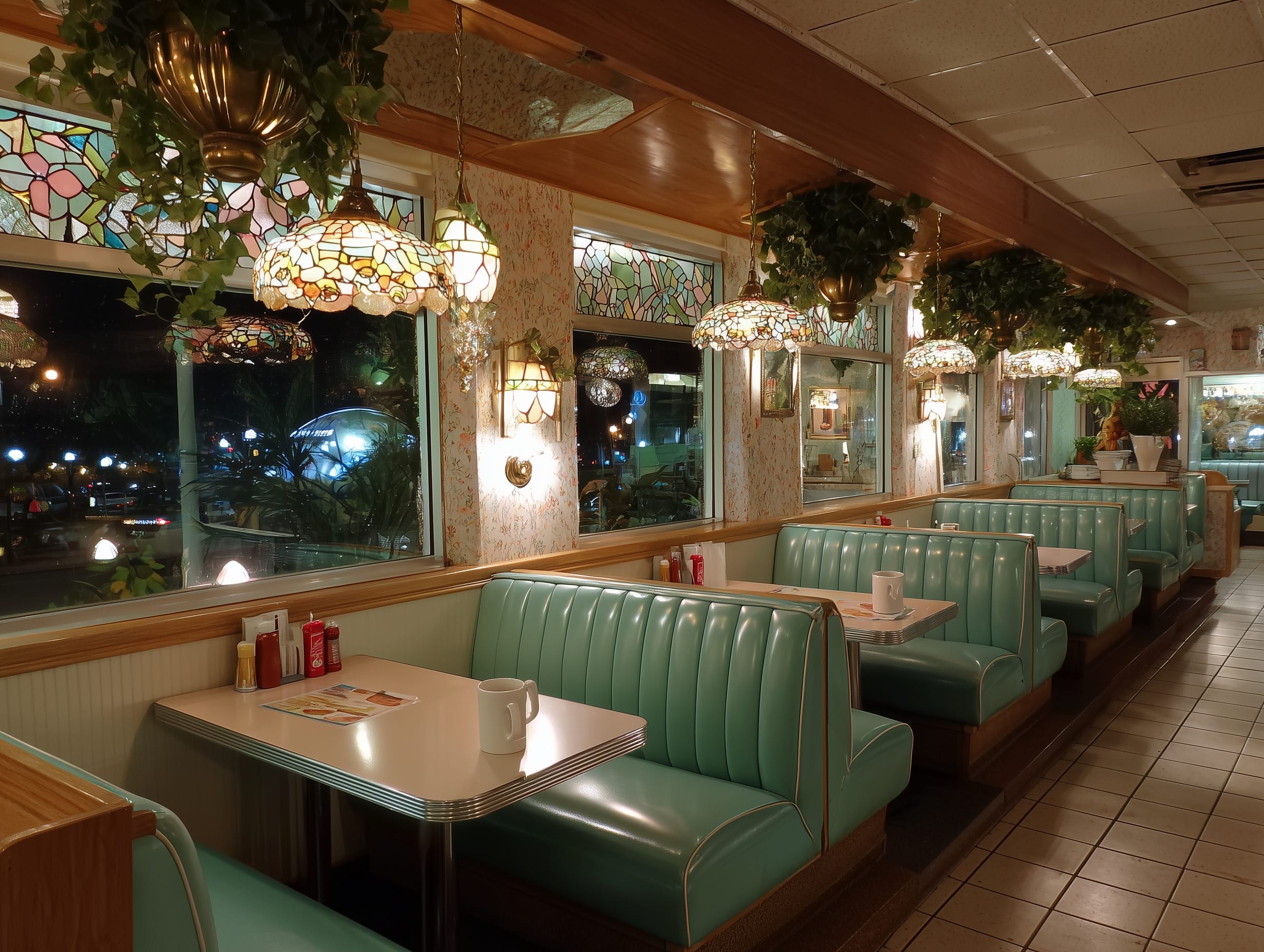
Maya kicked off her heels under the table. “My feet are screaming.”
“When's the last time you danced like that?”
“College? Maybe? There was this place in Evanston—” She stopped. “Actually, no. I've never danced like that.”
“Like what?”
“Like I didn't care what came next.”
The waitress appeared—sixty years old, seen everything twice. “What'll it be, hon?”
We ordered without looking at menus. Nachos with everything. Water that we needed more than air.
“So,” Maya said when we were alone again. “Tell me about the music thing. Really. Not the timeline. The story.”
I thought about how to explain it. The slow death of a dream. “You know how people say 'it just didn't work out'? Like it's clean? It's not. It's eighteen months of maybe. Six months of definitely not. Another year of pretending you're just taking a break. Then one day you're wearing a suit to a meeting about quarterly projections, and you realize you haven't touched your guitar in three weeks.”
“But you still have it. The guitar.”
“Three of them, actually.”
“Three?”
“The acoustic you saw tonight. An electric for when I used to pretend I was John Mayer. And one I built myself senior year of college.”
“You built a guitar?”
“I was very pretentious at twenty-two.”
“Were?”
“Okay, am.”
The nachos arrived—a monstrosity of cheese and jalapeños and regret. We attacked them like we'd been starving. Maybe we had been.
“Can I ask you something?” Maya said, cheese stringing from a chip.
“Anything.”
“Why consulting? Of all the things you could have done?”
“It was the furthest thing from music I could find.” I thought about it. “No, that's not true. It was... safe. Predictable. No one's dreams get crushed in consulting. They just get... managed.”
“That's the saddest thing I've ever heard.”
“What about you? Why pediatrics?”
“I like kids. They're honest. They tell you exactly where it hurts.” She paused. “Adults lie about pain. Kids just point and cry.”
“Do you like it?”
“I like parts of it. I hate other parts. Mostly I feel like I'm treating symptoms when I should be preventing causes. But insurance doesn't pay for prevention.”
“You sound like you need a change too.”
She looked at me. “Maybe I do.”
We sat there, processing that. The diner filled and emptied around us. A couple fought quietly two booths over. A group of kids from Columbia College laughed too loud about something that wasn't that funny.
“I haven't stayed out this late in two years,” Maya said.
“I haven't been out period in six months.”
“We're disasters.”
“Spectacular ones.”
She smiled. “Want to know a secret?”
“Always.”
“I used to write & paint all the time. Poetry. Terrible teenage poetry about feelings and boys who played guitar. Whatever watercolor on canvas I could muster.”
“Was I one of those boys?”
“You were several of the boys.”
My chest did something complicated. “Do you still write?”
“No. Derek thought it was... juvenile.”
“Derek sounds like an asshole.”
“Derek was an asshole. But a successful one. Which apparently made it okay.”
“It didn't.”
“I know that now.” She pushed the nachos away, pulled her coffee closer. “What happened to your band? Micah and Darren?”
“We're still friends. We just stopped being a band. Darren wanted to keep pushing. Micah got the teaching job. I got tired of being told we were 'almost there' by people who were nowhere.”
“Do you miss it?”
“Every day.”
“Then why not—”
“Because missing something doesn't mean you should do it. I miss being twenty-two and believing I was special. Doesn't mean I was.”
“You were, though. Are. That thing you did tonight? That's not normal. That's not someone playing it safe.”
“That was showing off.”
“For me?”
“Especially for you.”
She reached across the table, touched my hand. “Good.”
We stayed until four AM. Talked about everything: Her med school rotation horror stories, my worst consulting clients, the way Chicago looked different at night than it did when we were kids. How we both felt like we were attempting adulthood rather than living it.
“We should go,” she finally said. “I have a shift at noon.”
“Right.”
But neither of us moved.
“This was good,” she said.
“It was.”
“I don't want it to end.”
“It doesn't have to.”
She looked at me. “Doesn't it? Tomorrow you go back to spreadsheets. I go back to strep throat. We pretend this didn't happen.”
“Is that what you want?”
“I don't know what I want. That's the problem. I've been so careful for so long, I forgot what wanting feels like.”
“What does it feel like now?”
She was quiet for a moment. Then: “Like being seventeen and believing anything could happen. Like being thirty-two and knowing it probably won't. Like being both at once.”
“Come home with me.”
The words hung there. She didn't look surprised. Just... careful.
“Jae—”
“Not for that. Just... come home with me. Sleep on my couch. Or my bed. Or the floor. I don't care. I just—” I stopped. Started again. “I just don't want to wake up tomorrow and wonder if this happened.”
“You think you'll forget?”
“I think I've gotten very good at talking myself out of things that feel too good to be true.”
She stood. Put money on the table despite my protests. “Okay.”
“Okay?”
“Show me where you live when you're not pretending to be someone else.”
The walk back to the parking garage was quiet. Good quiet. The city was in that liminal space between night and morning, when anything felt possible because no one was watching.
In the car, she let me drive. Her head against the window, watching the city blur past. “Play me something,” she said, pointing at my guitar in the backseat.
“Now? While driving?”
“When we get there. Play me something you never played for anyone.”
“That's a dangerous request.”
“I'm feeling dangerous.”
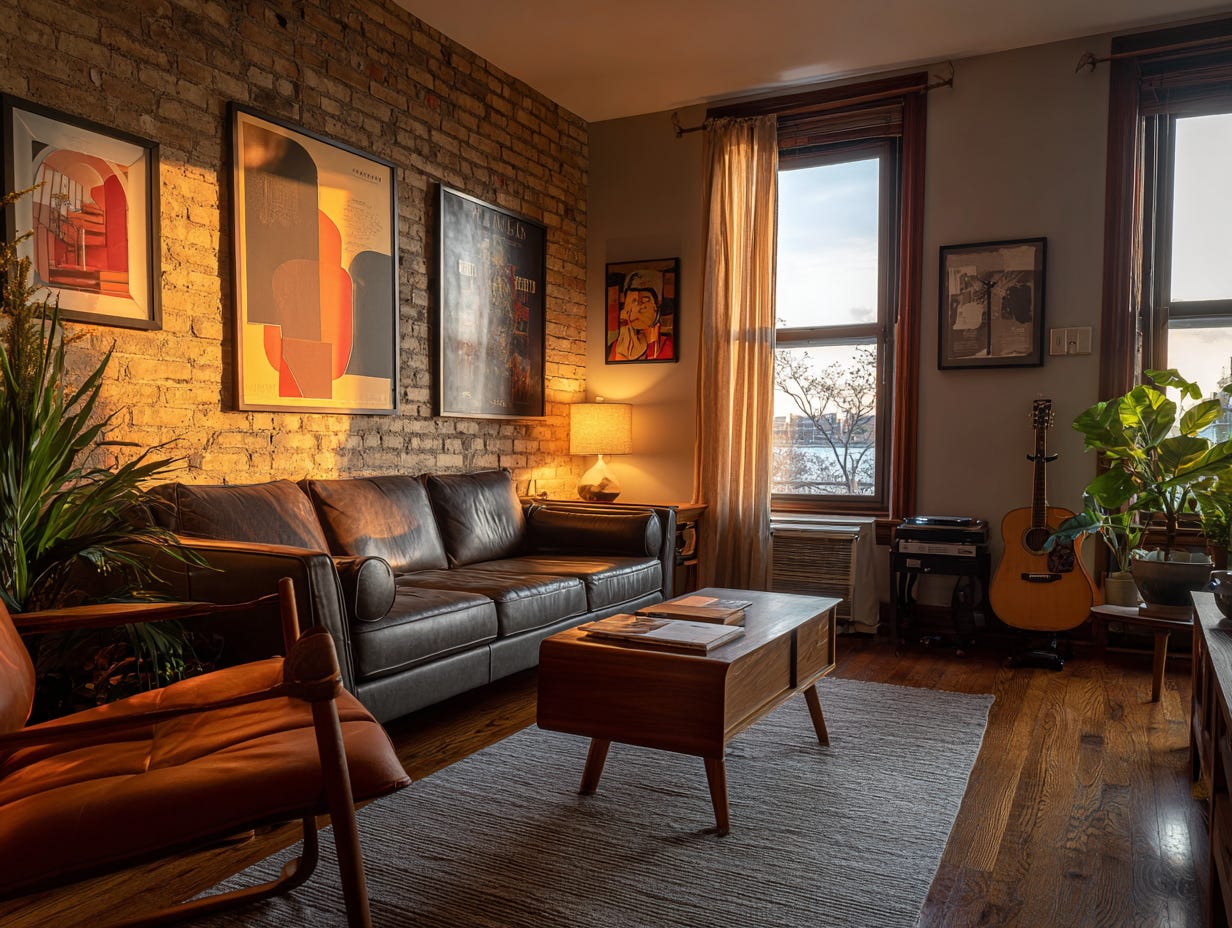
My apartment was in Uptown, a two-bedroom I couldn't really afford but kept because it had original hardwood and enough space for my music equipment. She walked in and immediately went to the window—the view wasn't much, just rooftops and the occasional glimpse of the lake, but at this hour, with the first suggestion of dawn starting to bruise the horizon, it looked like a painting.
“This is you,” she said. It wasn't a question.
“Is that good?”
“It's perfect. Organized but not sterile. Careful but not cold.” She moved to my record collection, running her fingers along the spines. “Vinyl?”
“I told you I was pretentious.”
She looked at me, repeated her request from the car. “Play me something Mr. Pretentious. Something yours.”
I got the acoustic, sat on the couch. She curled into the other end, feet tucked under her, watching me with those eyes that had been undoing me since high school.
“This is new,” I said. “Like, tonight new. So—”
“Just play.”
I found the melody I'd been carrying for weeks but couldn’t find the lyrics for.
“You're sitting quiet on my couch, shoes kicked off
The echo of laughter still clings to the loft
Your eyes are tired but they carry a flame
And suddenly, nothing feels the same…”
She sat and watched me as I sang. Intently, patiently. There was no room and no walls. Just us and a sunrise chasing my windows.
“We chased the night, we outran the clock
With every word, you broke every lock
I haven’t felt this light in years
You smiled — and it cleared the smoke and the fears
And now the sunrise paints your skin
Golden light on where we've been
I don’t want this moment to slip
So I say with a half-drunk grin:
When can we do this again
When can we do this again.
When can we do this again”
I picked up the note on the last ‘again’. Stretched it out. That felt good. Real good. I did the entire verse again.
“When can we do this again.”
When the last note faded, she moved closer, curled against my side.
“Jesus, you have such a gift.,” she said. “You did that for me just now?”
“Guess the nachos and the club wasn’t the only spontaneous things you pulled out of me tonight.”
She laughed, soft against my chest, yawned. “Ah, we're idiots.”
“Spectacular ones.”
“I'm going to fall asleep.”
“Good.”
“Jae—”
“Sleep. We can figure out the rest tomorrow. Sheets are clean in the bedroom, I’ll take the couch.”
“You’d take the couch and give me the bed?” she smirked and we walked into the room. I tucked her in; pulled up the comforter. “Such as gentlemen.”
I could hear her cozying into the pillow as I walked towards the door, “Jae? If I asked you to not be gentlemanly?”
Literally everything in me wanted to turn around and go back into that room. “We’ve been drinking, exhausted and had all this time to wait — we can wait one more day.”
She smiled. Sad and grateful and frustrated all at once. “You’re going to write about this, aren’t you?”
“Already am.”
“I can’t wait to hear it.” She hugged the pillow and closed her eyes. I closed the door softly behind me.
She was out in minutes. I stayed awake, watching the sky lighten through the window. That specific blue before dawn—not night, not day, but something right in between both.
6:47 AM. I Told myself I’d get sleep on the couch; went to my desk in the office instead & closed the door quietly.
I pulled out the journal I hadn't touched in months from the drawer. The words came like water breaking through a dam:
“Opened my eyes, I see you
Reminds me of beauty in new days
Swallowed by sheets, smells so sweet
Moments I never want to fade away”
Absolutely regretted not laying next to her now. Kept writing.
“But I know this too shall end
Sunrise will meet us again
Promise to come right back friend
Meet me here at days end
For a blueberry sunrise
I see forever in your eyes
When I wake, I just want to see you”
I wrote until my hand cramped. Minutes turned into what was probably a few hours to get it perfect. Some words didn’t fit in some verses. Wouldn’t work with the chorus. The melody in my head didn’t have a fall or winter vibe. The tone reminded me of Put Your Records On. Spring or summer. Made me want to switch the final stanza around in the chorus. It felt like possibility meets fantasy meets hopeful self-fulfilling prophecy, maybe. Now for the bridge and —
My phone buzzed. Nineteen Unread Messages
Micah: “Bro, did you see the vid little sis put up of our song last night? It’s blowing up on socials”
Darren: Links to Instagram Post
Darren: “And this morning it made its way to TikTok”
Micah: “Also got a DM from my cousin’s girlfriend, Designer Coat Girl”
Micah: “Apparently she’s in the music biz, did either of y’all know this before last night?”
Then, a message from an unknown number that made my breath stop:
“That was your song at the bonfire, right? -Zoey Rivera. Smokehouse Records. We should talk.”
Smokehouse. The label that passed on us, twice.
Then, from Maya, who must have woken:
“I left my earring. Don't throw it away.”
“I'm coming back for it.”
“And maybe dinner.”
“If you want.”
I opened the door to the office, swung my head around to the bedroom. She was gone. The blanket folded neatly. But her perfume lingered. The apartment still held the shape of her.
On the coffee table, she'd left a note on the back of one of my consulting business cards:
“Some mornings change everything.
This was one.
-M”
I picked up the guitar again. Found that half-step down where my voice lived when it wasn't hiding. Outside, Chicago was waking up. Somewhere, Maya was probably starting her day and then headed to work, healing kids with broken bodies. Somewhere, Zoey Rivera was planning how to turn one song into something more.
But here, in this apartment that still smelled like vanilla and possibility, I sat with a song that didn't need to be anything more than true.
Some mornings you wake up and everything's different.
Some mornings you wake up and realize everything's been waiting for you to notice it was already different.
This was both.
END
This Was For You © 2025. All rights reserved.